Showing posts with label retainers. Show all posts

Monday, August 31, 2015

Children of the God of Teeth

An excerpt from The Carcass of Noon;

Down in the dusty vale the impalers ply their trade - making upright citizens of those who have broken the law of the sainted dead. Few trees remain but slender saplings, carefully tended that they may grow tall and straight the better to correct the wayward.

 In that vale the children of the impalers are taught early that their teeth belong to the oldest of rats. By his permission are they allowed to erupt from baby gums. By his permission also the little borrowers are allowed to gnaw such portions as they find suitably delectable but only for their allotted time. When their time is up the teeth grow weak and fall out, as it were a sign of the senescence of their infancy and burgeoning into what passes for adulthood among the impalers. These adult years, the years between the ages of eight and their inevitable death by thirty-six from teeth gone rotten and poison in the blood, are held to have been purchased by the offerings they make of baby teeth and of teeth stolen from those they execute.

There is among them a trade in teeth chiselled from the mouths of the impaled and the-yet-to-be-impaled. Favour may be gained from the children of the eldest that scamper in the walls of the world by the right offering of the right teeth, though it is argued among them a great deal about who knows the correct procedures to contact and placate Those Who Gnaw Beyond. It is said by some that those beyond care not about the status of the one to whom a particular set of teeth belonged, more than that, it is not known precisely whether they can know, it is the case that they may be bargained with as to what manner of circumstance and heritage may be accepted to be embedded in each handful of teeth. The elders who engage in these bargains rely on a sophisticated and poetic form of lying that tests skilful rhetoric and plausibility against an otherworldly cunning;

Those that come in the night from the riddled dark beneath are appalling, but are dutiful servitors of Him That Gnaws. The ones who have pleased him smile broad and yellow at the twitching recipients of their expertise long into their fourth decade, until the inevitable cankerworm that grows in the ancient jaw claims them in the writhing sweaty death-beds it bestows.

They are knowns as fellers of wood and all the trees about are well-hewn to coppicing stumps and dank mud among which bristle spinily their nameless hamlets. Seven families dwell across a league of valley floor, the lookalike Skenchbacks, the impertinent Skelpies, the Skenetons as thin as sneering switches and Skenydougars with thunder in their voices, the grotesque loping Skerrimudges, the Skoomits of sickly hue and the rampant Skelters running before all.

There are 4d6 in each of the seven hamlets, of which 1d4 will be amenable to becoming hirelings in exchange for the right to chisel teeth from fallen and captured foes in addition to normal fees.

All are as Normal Folk without armour but with a clotting beetle, a tendle knife or a meathook. 

Their Laighlander heritage blinds them to the Darkness in the North. From the vale it can be clearly seen that a portion of the sky has fallen. Dread constellations glitter from beyond.

For Skenchbacks only roll hit points for one, all others are alike
For Skelpies assume the most antagonistic demeanour as standard
For Skenetons assume they secretly plot to impale whoever they meet on whatever trumped-up charges they can imagine.
For Skenydougars negate all attempts at stealth, they bellow and shriek like boreal tempests
For Skerrimudges allow a +1 bonus to surprise for they delight in ambuscades
For Skoomits assume a maximum of one hit point but an active alliance with the Eldest of Rats
For Skelters double movement at all times

Forenames and associated traits are determined by a d20 roll

  1. Trasimondo – pestiferous
  2. Ursine – hirsute
  3. Cateline – rancorous
  4. Harrowjack - staring
  5. Jehanne – mouldy
  6. Gormlaith - haughty
  7. Agrippina – skittish
  8. Eleazar – avaricious
  9. Grigori – merciless
  10. Ephrath – lascivious
  11. Ailill  - capricious
  12. Ashling – dazed
  13. Corvus – hungry
  14. Benedikt – secretive
  15. Egon – vicious
  16. Antje – unyielding
  17. Ulfberht – watchful
  18. Gerlinde – sly
  19. Hedwig – warlike
  20. Pherick – mumbly


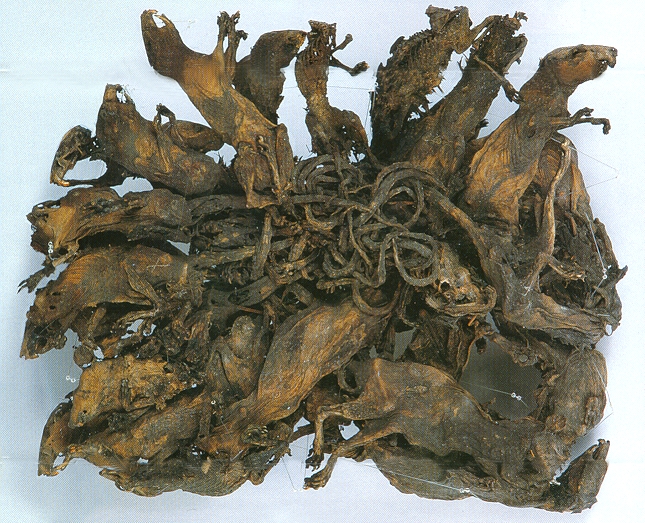
When a favoured impaler dies (1-in-6 is favoured, as are all Skoomits) a Rattenkönig bursts forth from the earth in a hideous swarming mass to enact vengeance upon the slayer according to the bargain of the teeth .

Rattenkönig: AC 13 HD 2+2 #att: 4  dmg: 1 + bloody flux mv: 40’ ML: 11 AL: C

Daunting: hirelings check morale on sight.

Bloody Flux: Save vs. poison or contract diarrhoea, vomiting, cramps. Save vs. poison each day or lose a point of constitution. Three consecutive saves indicates recovery.

Benighted as they are and inured to atrocity by their calling, the impalers have dark prejudices and a predilection for the brutal imposition of penalties upon those they deem, by the fickle whim of their violent instincts, outlawed;

D6 determines prejudice of visited family;

1. Any diminutive and rotund individual with clever feet is obviously a Grummuck o’ Grundlestoan and should be dragged naked through brambles before being skewered transversely upon an iron spike

2. Any lankily fey and wanearthly personage is probably a Neugle from the Wild Black Yonder who covets the tears of the innocent and should be impaled upright upon a thorny branch and burnt after death in a furnace.

3. Any stooped and gravelly person is thought an Ambulant Worm crawled hence from its millennial encystment in the dark earth’s bowels. For such a thing only the inverse impalement through the wretched maw will ensure its demise. It is customary to shatter the limbs prior to the enactment of the sentence.

4. A clever-looking bloke with cumbrous tomes is in all probability a Dwimmerthane in the service of Uncle Withershins, who keeps a ledger of the minor iniquities of right-thinking folk that he may the more effectively tempt them from the road to Neorxnawang. For this crime he should be impaled backward through the lower ribs and pelted with all manner of refuse.

5. A weird woman with pets has in all probability tempted the Ounkin Wights from the Middle Airs into bestial form that she may indulge with them in manifold debaucheries. Such a one need be buried alive with her familiars and pierced with a dozen stakes of rowan wood.

6. One who moves with practiced poise, cowled and cloaked and lightly-shod, is of a certainty a Malign Funambulist who seeks to steal the salvation of sleepers through their nostrils. The punishment for such is to be gaunched at a rampart upon an iron hook.

Each year comes a hundred captives from the town of Strokannet in obedience to a law that seeks to suppress the Cormorantine Heresy that died seven generations since. The quota still exists by the unchangeable law that thrives among them and subjugates their native will to the performance of meaningless slaughter in the name of those that are dead. For those of Strokannet and Routhercocke are subjects of a thanatocracy whose hierarchical positions have long been held by the dead of seven hundred years gone. The will of the dead manifests in reality as edicts handed down to be heeded above all, such that the living aristocracy in those towns have been demoted over the centuries that they are reigned over now by, respectively; a Seventh-degree Underslave’s Verminhandler and a Thrice-banished Scullion-hags’s Groom of the Unmentionable Exudate (in common parlance, they are still referred to as the Handler and the Groom but the awareness of the ignominy inherent in all in these latter-days is ever-present, even unto grovellings and prostrations that punctuate everything). These potentates and all their even more ignominious underlings are obedient to the tracts their ancestors bestowed upon them but above-all to that bestowed by the seven chief tracts in all their gnarled poesy and in their crippling opacity of ancient syntax. These tracts are; The Margrave’s Tract, The Tutelary Subdeacon’s Paradoxes Reconciled, The Burgrave’s Brief commentary on the Margrave’s Tract, The Haberdasher’s Appendices Re-examined, The Apertures ‘twixt Gelding Days by her Grace the Slattern-Keeper’s Mistress et cetera . Their names are beside the point, their contents are such that the enunciation of psalms and platitudes from each will summon forth an obedient citizen of either the Branks of Strokannet or of the Bulwark at Routhercocke whose willingness to heed the Tract-holder’s interpretation of the Tract necessitates their servitude in the most circumstances (Morale is governed by charisma as usual)

Lost tracts are to be found in troves in place of various grimoires at the GM’s whim. Read aloud from a tract in the Language of the Dead and after 1d12 days arrives one whose rank is beneath that of ninth-degree underthrall (Summoned individual is a level 3 henchperson);

D10 determines

1. Lutwidge: An Amanuensis of Strokannet In customary ink and sackcloth arming-jack and wooden teeth, lang-pike of seven-yards length. Believes that carrots inflame the passions (AC +1, lang-pike d8 dmg)

 2. Morwenna : A Carpentaria of Routhercocke in jangle-sark, a caged songbird upon her helm and a billhook (the songbird dies when evil is nigh, the jangle-sark provides +1 AC but -1 chance to surprise, Billhook d10)

3. Tripping Nestor: A Dredgerman of Strokannet with Hewing-hods of tarnished bronze, whose fighting-style resembles a demented hornpipe jig (strikes twice for d3+1 dmg each time)

4. Braam: A Lime-kilner from the Routhercocke Ovens with blood in his spittle and ancient barking-irons (barking-irons [pistoles] d6 dmg, ROF ½ backfire on a 1 for full dmg, ignore armour)

5. Tristram Goad: A Destrier’s Concubine from the stables at Strokannet with high helm and horsehair plumes and flail and no mercy in his heart (Flail d8, ML check to prevent pursuit of fleeing enemies to the very end)

6. Atropa Glandrankle: Imperfect Stranger of the Lost House of Strokannet* in green battle-smock and bearing a green Morgenstern and a flask of lindwurm bile that blazes with venomous fire when exposed to air. (AC +1, Morgenstern d10 dmg, Lindwurm Bile: 2d6 per rd. for 1d4 rds + save vs. poison to all within 20’ or swoon from the fumes for 1d4 rds)

7. Corporal Griskin: A Leatherhead from the barbican at Routhercock in rancid gambeson and rusty iron jackboots, wielding bastinado and bullwhip with exuberant abandon (Bastinado d4, Bullwhip d3, AC +2)

8. Erszébet Snood: Carrion-Hunter from the Routhercock catacombs with sevenfold wig and capacious black robes within which are hid a flesh-axe, a garrotte and a latchet crossbow. (Flesh-axe d6, garrotte d2/rd, latchet crossbow d6 ROF 1/1, AC +1)

9. Salomon Grist: Zelator of Strokannet, wheedling stammerer, blinky and vile, swathed in dusty shrouds and bearing a pile of bundled vellum on which are writ condemnations for trifling infractions (Condemnation 1/wk , 1d4 bane-thralls [as skeletons] emerge from the ground to drag the condemned into foetid abysms)

10. Piroska and Gullet: Dog-whipper of Routhercocke in russet cowl with hulking vicious pitcher-dog in ringmail coat (Pitcher AC: 15 MV: 60’ HD: 3 #att 1 bite Dmg: 1d6 )

*The Imperfect Strangers are aelves who of old dwelt nigh Flambergast and know of the Great White Horse of that ruin

Sunday, February 1, 2015

Hooligan Troupes of the Hither-Fells

When I read this at Monsters and Manuals about the nature of the practice of writing I thought it made sense and so returned to my previous habit of tapping on a keyboard. Nothing came of it at first (there is definitely a rusty period) but eventually the same dense and crusty stuff that I enjoy started to re-emerge, which was gratifying. Additionally, Santicore reared his ugly and I availed myself of the opportunity to do the layout for my own entry which got me interested in the algorithmic approach to content-generation and allowed myself a little bit of sneaky re-writing.

I'm interested in nomenclature and the suggestibility of imaginations. I often approach things from a rather Tolkienesque angle, coming-up with names and then trying to find out what they mean. Rhythm and cadence and prosody as well as connotation and symbolism open up vistas for the imagination to explore.

So I long ago decided that NPC party was insufficiently evocative a springboard for my imagination, suggesting as it did some kind of bland political organisation, so I decided that they would be called Hooligan Troupes. This term was satisfactorily animated and raucous. In my mind they were, of a sudden, alive with agendas and troubles to offer players.

The following table is an attempt I have made to further animate the idea of Hooligan Troupes, as well as engage in a kind of mechanically terse proceduralism. Ideally, the generated troupe will be engaging, memorable and connected to the setting, and the fluff is entirely arbitrary, the tool generates a certain number of characters of a given level, carrying a certain macguffin for a certain patron, pursuing and pursued by other hooligan troupes, specific individuals and factions I have inserted are really just placeholders.

_________________

The Hither-Fells are the rolling wastes and moorlands beyond the village of Foote rolling northward all the way to the rumoured fastness of Gibberhelk, whose dread castellan names himself the Hail-King and gnaws upon his madness in the waylorn wilds. Beyond is unknown and unknowable, a black horizon and interminable twilight.

Gibberhelk, where the Hail-King reigns in procedurally-generated mouldering splendour.


Wandering this vast region are troupes of untamed and exiled wandering villains. To generate a troupe roll 2d6 of different colours: the first roll determines the number of hooligans encountered; a roll of one indicates the leader only is encountered,  roll of two indicates the leader and the lieutenant and so on, it should be noted that an equal number of underlings are encountered as members of the troupe. Additionally, this roll determines the patron for whom the particular troupe is working at that particular time.

The second roll determines the particular troupe encountered with their corresponding underlings as well as determining their grail, this is essentially the macguffin that they happen to be carrying at that time for the patron generated earlier, whether they are delivering it to that patron, taking it from that patron to a third party, destroying it, or doing something else entirely is up to the GM.

There is also an assumed relationship between the troupes: each troupe is assumed to be pursuing the numerically subsequent troupe and, in turn, being pursued by the preceding troupe, all pursuit being with hostile intent (troupe 6, the Strangelings are assumed to be pursuing troupe 1, the Feckless Knaves, creating a vicious circle). Notably, it is possible for multiple troupes to be in opposition and to be working for the same patron, this is merely indicative of the fey and contradictory nature of the powers at large in the Hither-Fells.

Additionally, the second roll determines the level of each individual hooligan within the troupe as per the formula on the table; Leaders are assumed to be 6th level and the lowest ranked member of the troupe is assumed to be 1st level, this can be easily scaled to oppose PC parties if necessary.

Finally, the first roll generates an inter-factional set of relationships that could potentially be exploited for dramatic purposes, while not providing any mechanical effect, the fluff is crunch rule applies.

All of the automatically-generated dials on this array can, of course, be individually generated or determined arbitrarily. It is only my own obsessive desire for elegance and simplicity that makes me do it this way.

The format as presented has a few idiosyncrasies that bear mentioning. It is my preference to, in accordance with the aforementioned desire for simplicity, assume an average number of hit points per level, rounded up and adjusted for constitution. The ability score bonuses and penakties are assumed to be plus or minus one but give the GM leeway,should individual hooligans transition to regulary encountered NPCs, to assign the highest and lowest scores to the appropriate abilities. Armour is given an AC bonus, assuming ascending AC. The curious level titles I have given can act as just another bit of disposable fluff if that is desired, but there is also a secondary, slightly crunchy effect which is that individuals gain a reaction bonus with alike and aligned factions once they've bought into a career, and certain equipment discounts, as well as access to special items can be assumed to be a part of the career's perks. None of this is detailed here so iy can all be safely ignored.


I. FECKLESS KNAVES


     1.       Joachim Crimeshanks: lazy and ­squat, talented dissembler, renegotiates relationships sentence by sentence. [Captain of Charlatans, as thief, INT+, CON-, cranequin arbalest (d8, 1/2), spadroon (d6), buckler (+1), jupon (+1), mail coif (+1)]

    2.       Slatterkin Fraile: seems a freckled ogress in gambeson and kettle hat, betimes dappled light pranks her eyes and she falls and drools and has visions of cool green realms where she is empress [Mosstrooper, as fighter, STR+, WIS-,  halberd (d10), gambeson (+1), Kettle hat (+1)]

3     3.  Hakenbüchse Imbrocato: cunning engineer and strategist, deviser of war-wagons and grenadoes and devices for spraying naphtha and quicklime, he is catastrophically combustible. [Apronman, as thief, DEX+, WIS-,  hand-gonne (d6, ignores armour, 1/3) gunner’s stiletto (d4) grenado (2d8 10’ radius), breastplate (+3) Special: explodes for 3d6 dmg if set alight]
  
     4.       Ginflute Sprig: her jackboots are full of stilettos, her heart is cunning and wary, none who have betrayed her yet live [Miscreant, as thief, WIS+, CHA-,  stiletto (d4) sword breaker (+1, d4), jackboots (+1) pourpoint (+1)]
  
     5.       Crimson Plethora: slatternly, lackadaisical, sinister and pantalooned, there is a reek of sorcery about her, a dusty, musty, fusty smell with redolences of fear and sex, she enthralls monks just to see them grovel and weep [Pythoness, as magic-user, INT+, STR- akinakes (d4), Spells: charm person x2]
   
    6.       Girt-by-Satchels: an utterly abandoned vagrant who compulsively gathers useless things in preparation for an imminent catastrophe, surprisingly dangerous with his clotting-beetle [Vagabond, as thief, clotting-beetle (d6), jack (+1)]


II. LOST CRUSADERS


    1.       Ultrogotha: her hair is enormous, her voice is rich and deep, her destrier is masterful and vast, she wears mirror-bright armour and smells of grease and brimstone [Vindicatrix, as fighter, zweihander (d10), mace (d6), plate (+5), burgonet (+1)]

2.       Amaranth Incarnadine: perilously beautiful and young and lit as if by the last sunset of the world, fleeing the persecutions of her boyhood, the streaming banner of her hair acts as call to crusade [Fugelmaid, as fighter, CHA+, WIS-, arming sword (d8), heater (+2), hauberk (+3)]
   
       3.  Glisterfrigg the Loath: burned black by an encounter with an a laidly wurm, she walks in a shadow of doom with long black spear and black shield unadorned, her mouth is red and her voice is harsh and fell [Shieldmaiden, as fighter, CON+, CHA-, spear (d6) kite shield (+2), lamellar harness (+4)]

    4.       Sledgefork: hooded eyes and splayed toad-hands, pungent flagellant with cassock and flail who flirts with gangrene and arnaldia and sees a ferocious truth behind the world [Flagellant, as cleric, CON+, CHA-, flail (d8), Spells: cure light wounds x2, bless]

    5.       Lammermoor the Infidel: scarified and haunted by the war with the darkness, his hair is white and his eyes are red with weeping, his rusty harness creaks and squeals [Scutiferous Aspirant, as fighter, WIS+, CON-, military fork (d10), half-plate (+4)]

     6.       Hans-who-Itches: has ballestrinos, stirrup-, latchet-, goatsfoot-, cranequin- and windlass arbalests and quarrels for every occasion carried in a barrow-cart painted green and advertising wondrous feats of skill, he is wracked with intense and ceaseless itching so that he is a scabrous insomniac shadow and can no longer shoot. (Arblaster, as fighter, WIS+, DEX-, katzbalger (d6), buckler (+1), Jack-and-chains (+2)]


III. OATHBREAKERS


   1.    Lamgammachy Hallow: ancient crone of viciously sharp features and viciously sharp temper, borne on a palanquin by lurching odiums of mannish shape, claims to be, by hereditary right, Queen of Skinflint Hedge and several gullies thereabouts, demands paltry tribute and vague obeisance. [Gyre-Carlin, as magic-user, w/-  six zombie thralls, WIS+, CON- Spells: magic missile, sleep, invisibility, levitate, lightning bolt]

2.    Hadean Tear: has shorn his head and body and infibulated himself, walks naked in the world bereft of desire, practices daily ritualistic vivisections to retain his purity [Demonologist, as magic-user, WIS+, CHA-, Spells: darkness x2, invisibility, ESP]

    3.    Goatloon, the Carnifex of Untimely Brisket: somewhat bestial giant idiot with a cleft palate and an enormous gleaming axe, prefers to wrastle and bind his victims, gets slobbery with excitement at the prospect of decapitation [Carnifex, as fighter, STR+, INT- , grappling (d2), executioner’s axe (d10, -4 to hit)]

4.    Canterangle Broguentwine: gaunt and studious figure-flinger preoccupied with theoretical deconstructions of reality, is consequently brittle and close to suicide (Figure-flinger, as magic-user, INT+ WIS-, Crutch (d4), Spells: read magic, detect magic, detect evil, phantasmal force]

5.      Chlodovech Harpe: far-wandering warrior of austere and peculiar heathen tribe, cuts his hair in uncouth manner, speaks with clipped and formal directness but incorporating convoluted perversions of syntax and tense, carefully prepares his sica and pelte and individually specialised javelins prior to each battle, kills with workmanlike efficiency [Paynim Reiver, as fighter, STR+, CHA-, sica (d6), javelins (d6), scale corselet (+3), spangenhelm (+1)]

6.    Ariadne Firkinmolde: Fierce huntress with yellow teeth, red coat and blue arrows, rides a jackass all shuddery with malice, has a wild voice for shouting over the wind [Heathen Huntress, as fighter, DEX+, CHA-, hunting bow (d6), sabre (d6),teghily (padded armour), +1]


 IV. DESERT-SEEKERS


1.   The Almondine: denounced heretic false messiah, small and rotund and beaming, she bears the stigmata of unsuccessful crucifixion and of scourgings and rackings but maintains her unshakable certainty. (False Messiah, as cleric, CHA+, STR-,  threshal (d6), gambeson (+1) basinet (+1) Spells: remove fear, resist cold, purify food and water, resist fire, speak with animal, cure disease]

2.      Malthus Pizzlewisp: eunuch-sorcerer, shrill and pasty, elegantly tapered hands and ridiculously superfluous parasol, carries a little cage with a black canary who is intransigent and vile [Castrato Incantare, as magic-user, poniard (d4), Spells: charm person, ventriloquism, mirror image, invisibility, haste ]

3.     Epicanthus Brunt: Braying oaf in knapskull and haberschon who peers from a face that has been ruined by violence. [Brute, as fighter, STR+ CHA-,  morgenstern (d10), haberschon (+3), knapskull (+1)]

 4.  Graylung the Frigantine: sallow youth of vaguely elfin cast and vicious misogyny, speaks in the barely-intelligible affected dialect of the Agnatic Squirarchy, full of circumlocutions and synechdoche and with which even he has difficulty enunciating anything meaningful, wears a crimson coat-of-plates [Gentleprig, as fighter, INT+, CON-, cinquedea (d6) coat-of-plates (+3) heater shield (+2)]

5. Flandleman Rut: apparently moribund toothless gaffer of fiendish vitality, bears a black oar with him in lieu of cudgel to remind all he meets that we paddle through life on a river of misery (Brigand, as fighter,CON+, INT- oar (d6), siege cap (+1) aketon (+1)]

6.   Erasmus Borborygmo: corpulent iatrochemist tattooed with anatomical diagrams relating to the circulation and balance of the humours, prone to radical realignments of personality due to abuse of medicinal elixirs, currently melancholic. (Iatrochemist, as magic-user INT+, CON-, cane (d2), Spell: charm person]


V. EXILES


1.       Tanaquil Slake: Disinherited baroness of a realm that has been burned and depopulated, attired as a cuirassier with three-quarter-plate, cabasset and caliver, insists upon the observation of legal procedure prior to execution and torture, snide [Ignoble Heir, as fighter, WIS+, DEX-, prong-maul (d10), 3/4 plate, (+5)]

2.       Gallivantus Kirklouse: craven Reiter of the Salient Coot who deserted his order on campaign and lives in banishment and disgrace, scraggly ginger beard and unconvincing pale eyes, lance and hammer and munitions harness [Runagate Lancer, as fighter, lance (d10), skullhammer (d6), harness (+5), armet (+1)]

3.       Hackamuggie Lammiger: spade-bearded ark ruffian with wooden leg and boarding pike, outrageously nimble and fearless, chuckles as if at a secret joke (Ark Ruffian, as fighter, DEX+, WIS-, boarding pike (d6), ­­­­­jack (+1)]

4.       Oengus the Cow Leech: Enormously muscular sunburnt cottar of broad-brimmed hat and ugly good-humour, bristling with knives (Bounder-Lout, as fighter, STR+, DEX-, tendle-knife and broacher (d4,d6), buff-coat (+1)]

5.       Forthwith Tobermory the Lesser: Chinless wonder of a hedgepriest-scholar, seethes with discontent, brittle of temper and a secret sadist, hates his greater namesake more than life itself. [Hedgepriest, as cleric, INT+, CON-, quarterstaff (d6), Spell: cure light wounds]

6.       Myriad Burncake: scullion-wench turned cutthroat murderess, exceedingly forgettably plain and mousy, equally deft with razor, garrotte, beaming knife and earshank [Murderess, as Thief, DEX+, CHA-, razor, garrotte, beaming knife or earshank (d4), ringlet-doublet, (+2)]


VI. STRANGELINGS


 1.    Grisly Huberht: Little gluttonous hobthrust with a malevolent profusion of sideburns and a penchant for practical jokes involving terrible mutilation. [Hob o’ the Hurst, as Halfling, CON+, CHA-, War-flail (d8), byrnie, (+3) Shapka – reinforced papier mache cap (+1)]

2.     Nox Nay Nabbity: of apparently indeterminate gender, shrouded in many mantles of fur and silk and velvet finery adorned with broidered sigils and glyphs of ill-omened stars, secretly a Capriped, her bestial features are well hid but her musk is apparent to the discerning nose (Capriped Sorceress, as elf, INT+, CHA-, baselard(d4) kazaghand(+3), Spells: sleep x2, web, phantasmal force]

3.      Frecken Klöster: stunted mummer in grotesque deofol-mask and tintinnabulous coat of bells, dances awkwardly to drive away evil with terrible clangour, is mostly deaf and crawling with vermin. [Hunky-Punk, as halfling, DEX+, INT-, battle-thurible (1d6), coat of bells (+3), special: noise gives +30% to Move silently within 30’]

4.       Gryndercrust: A lubber-fiend, long-armed, cow-tailed, uncouth and hairy. Obsessed with the ritualised transactions of agrarian society, eschews gold in favour of milk and barley, flies into a scything frenzy at the harvest moon. [Lubber-fiend, as halfling, STR+, CHA-, reaping scythe (d8)]

5.      Erstwhile Shale: sharger scout, jogs from hiding place to hiding-place, seeks to outwit, outflank, ambush and murder any possible threat, has barbed arrows tipped with curare and is good with knots. [Sharger, as dwarf, shortbow (d6 + poison), jack (+1)]

6.     Snell the Claker: demon-haunted petty-conjuror of tattered weaselish appearance, has a patchwork cloak of scarlet and green and a hell-fiend’s face upon his arse that whispers appalling things [Claker, as magic-user, INT+, WIS-, poniard (d4) Spell: sleep]
-
______________________________________________________

UNDERLINGS

Underlings are completely interchangeable hapless fodder appropriately themed to accord with the corresponding troupe, one of which appears for each Hooligan present:

AC: 10 MV: 40’ HD: ½ hp: 3 #Att: 1 dmg: 1d4 ML: 8 (10)

1. Wayward Clavigers: servile underlings in faded green doublets and shakos, bearing cluncheons, kirn-crewks, half-pikes and rushlights

2. Lowlander Gaberlunzies: filthy peasantry in sheepskins, bearing sluff spades and dunnuks

3. Children of the Almondine: idiot younglings enthralled by the false revelations of the Almondine, white tunics and righteous wrath

4. Starveling Lampadarii: holy lamp-bearers, gaunt and undernourished, bearing lanterns, candles, torches to light the way and staves to correct transgressors

5. Kithans of Flambergast: scurrilous scoundrels fled from a dead city, sick with grippe, bearing plumbata and caetrata

6. Manikin-folk: poxy midgets half the height of a conventional dwarf, wheedling and sly and bearing nail-swords


Sunday, June 13, 2010

On Languages and Herbalism


Extending Languages

As with the rules for Retainers, I feel that the rules for languages have an untapped potential and can be extended to make the game richer and more interesting as well as more specifically evocative of the intended atmosphere. I recall paying very little attention to languages when I played D&D, and as a result of that, completely discounting the Intelligence attribute as anything but a guideline for role-playing. I think languages can be a means of introducing a kind of skill system-lite without adding a whole other mechanic.

All characters speak the Low Tongue (i.e. Common) and their alignment tongue, additional languages are granted to characters with high intelligence. Knowing a particular language not only allows a PC to communicate with other speakers of that language and thus have the opportunity to hire them as retainers, it also allows them to access and use particular equipment not available to speakers of other languages. Use of magical or sacred items of equipment requires special cultural knowledge that is unavailable to those that do not speak the appropriate language.

In effect, this allows the imposition of a skill mechanic by welding it onto an already existing and underused mechanic. Languages can provide options beyond those of race and class. I am interested in using languages as a means of utilising resources – treasure – as well as adding an aesthetic component, allowing characters to engage with different aspects of the setting in different ways.

Assuming that languages are generally fairly much ignored except as a means of providing important information to specific players, Intelligence becomes a dump stat, in much the same way as Charisma is a dump stat if retainers and reaction rolls are underutilised.


The Low Tongue: A bastardised version of the imperial tongue mixed with the ancestral languages of the peoples of the northern parts of the Empire. It is the language spoken by the most of the people of the Northern Marches.

Retainers: Peasants, Pilgrims, Poachers etc.

Special Items: Legendary Weapons and Armour, Amulets, Magic rings, caps and cloaks, Potions

The Sacred Imperial Tongue: The language of the Empire of the South and the divine language of the Imperial Church.

Retainers: Imperial Guardsmen, Agents and Priests

Special Items: The Sacred Canon, Clerical scrolls, Ensorcelled weapons of the Empire, Holy Relics

The Old Tongue: The language of barbarian outlanders and of witches and wizards.

Retainers: Heathens, Hermits, Druids, Shamans

Special Items: Magical spellbooks, Talismans, Idols, Druidic Tools, Magical Scrolls

The Language of Wild Beasts:

Retainers: Birds and beasts, Spirits of the Wild

Special Items: Wild Talismans

The Language of Trees:

Retainers: Entities of the Wild Wood

Special Items: Staves, Wands, Herbs

The Language of the Dead:

Retainers: Grave Diggers, Body Snatchers, Death Cultists, The Unquiet Dead

Special Items: Cursed Weapons and Armour of the Dead, Unholy Relics


The Language of Faerie

Retainers: Elves, Dwarfs, Halflings, Faeries

Special Items: Faerie Weapons and Armour, Fey Talismans

Tinkers’ Cant

Retainers: Vagabonds, Troubadours, Bandits, Tinkers

Special Items: Poisons, Thieves’ tools, Charlatans’ Tricks


Other Languages Might Include: The Trade-Tongue, The Celestial Speech, The Infernal Speech, The Language of the Kingdom-Beyond-the-Sea, The Secret Language of Gnomes, Alchemists’ Cant etc.


Herbs

I’ve loved the idea of herbalism in rpgs since I played Maelstrom when I was young. It fits especially well with the psychedelic Dung Age vibe I’m trying to achieve and also allows for the introduction of minor magical effects to the toolkit of the Average Joe. The real Middle Ages was full of cultural practices that were attributed with miraculous power (little has changed, really). I want for there to be a spectrum between mundane items and magical items that encompasses herbs, idols, shrines, holy relics and scriptures, alchemical formulae and various other oddments. I do not want to overcomplicate things with extra mechanics for PCs but to open up options available under existing mechanics by introducing campaign-specific items that require knowledge of specific languages to utilise.

Herbs may be found at random, or sought out at the cost of a number of Wandering Monster/Unpleasant Event checks. Uncommon herbs are found 10% of the time after two checks, Rare herbs are found 10% of the time after 4 checks. The DM may adjust frequency of discovery according to discretion.

Bladdervine: +1 Strength, -1 Dexterity for 1d6 turns. Uncommon

Bog Moss: Heals 1d4 hp but stains mouth, teeth and hands, -2 Cha for 1 day. Uncommon

Lanthorn Poppy: Smoker falls into a deep slumber for 2 hours, after which one first-level spell may be recalled. Rare

Sweet Grimblewort: +1 Charisma due to delightful fragrance. Uncommon

Glimmerweed: Infravision to 60’ for 1d4 turn, Character is at -1 to hit in bright light. Rare

Salamander Rush: +1d4 temporary hit points for 1d6 turn, -3 to Wisdom. Uncommon

Fireflower: +2 to dmg for 1 turn but causes 1 dmg. Rare

Yeoman’s Blessing: +1 to missile attacks. Uncommon

Harrow Grass: Detect Invisible for 1d4 turns, PC goes blind for 1d6 turns, 10% chance of being permanent. Rare

Scathe Nettle: Grants a +2 to saving throw vs. poison for 6 turns but causes 1 turn of violent purging during which character is incapacitated. Uncommon

Sunday, May 2, 2010

The Lowly


If there is one part of the D&D ruleset I vastly underutilised back in the day it was the retainer/hireling/henchman rules. Using the retainers rules as written in BECMI or LL there is no reason why any dungeoneer would not hire as many retainers as they could to provide more firepower or cannon fodder. For some reason my friends and I always assumed this would be too complicated but, really, it is no more complicated and requires no more bookkeeping than all the monsters we rolled up and slaughtered time after time.

I think that retainers offer a number of opportunities to increase the grittiness of the Dung-Age milieux. Their lowliness appeals to me. I have little interest in having retainers that are the equal of the PCs in power so I’ve gone with the assumption that retainers are zero-level grunts whose survival is even more tenuous than that of the PCs. The death of retainers hammers home the Crapsack World atmosphere as well as heightening the chaos and tension of play. Additionally, reatainers are ready-made PCs-in-waiting. When one of the PCs dies a retainer can be automatically promoted to whatever class is appropriate to become one of the protagonists.

As an aside I am going to be using a simplified version of the encumbrance rules wherein each character is able to carry up to their strength rating in items. Going over this means the character moves at half pace. Some items have a higher or lower rating (e.g. 100 coins = 1 item, a mail shirt = 3 items) but I will try to keep it abstract and simple. All retainers are assumed to have ability scores of 10 until such time as they become PCs so are able to carry 10 items. I will not include rations and clothes and suchlike stuff because I am not interested, I think I’ll use some other rule to determine when characters run out of stuff rather than make people keep track of how many rations each of their five retainers has.

I’m allowing most of the retainers to have some of the abilities of various classes as a means of augmenting the abilities of the PCs. If the party has no thief proper, an urchin, a poacher and a tinker will be able to perform many of the same tricks.

All retainers are going to be human. Demihumans are weird and exotic and I’d prefer to focus on the lowly, the grotty and the superstitious to maintain the atmosphere.

Morale is fun. People do run away from battle far more often than they fight to the death. Retainers allow this to occur without the players losing agency over their characters.


Retainer Characteristics
(No mechanical effect, will just make the retainers annoying and/or memorable)

Roll d20

1. Surly
2. Filthy
3. Lecherous
4. Servile
5. Superstitious
6. Sardonic
7. Itchy
8. Fey
9. Addle-pated
10. Devout
11. Pock-marked
12. Gluttonous
13. Indolent
14. Sly
15. Sneering
16. Belligerent
17. Rash
18. Cock-eyed
19. Boastful
20. Snaggle-toothed

Types of retainer d100

01-02: Chirurgeon
03-15: Urchin
15-20: Pagan
21-30: Pilgrim
31-35: Poacher
36-37: Hermit
38-40: Tinker
41-43: Scholar
43-48: Fool
49-50: Apothecary
51-00: Peasant


Chirurgeons are field surgeons, barbers and leeches. They have the ability to treat wounds. If a chirurgeon attempts to treat a wounded character that character must succeed in a constitution check to receive 1 hit point’s worth of healing. Failure in the check means the character sustains one point of damage due to the brutal nature of the treatment.

Hit points: 1d4

Equipment: Field surgery kit (counts as 3 items), dagger

Cost: 5gp/day

Urchins are beggars and cutpurses. Urchins are able to pick pockets (23%) and Hide in Shadows (13%) as a first level thief. They also receive a -2 penalty to morale.

Hit points: d4

Equipment: Dagger

Cost: 5sp/day

Heathens are idolatrous savages from the outlands. Heathens gain a +1 to morale except when in the employ of a fanatic when they receive -1.

Hit Points: d6

Equipment: Spear, throwing axe, helmet, shield

Cost: 2gp/day

Pilgrims are pious folk in search of redemption or enlightenment. Pilgrims in the service of a fanatic gain a morale bonus equivalent to the fanatic’s level.

Hit points: d6

Equipment: staff, holy texts.

Cost: 1gp/day

Poachers are stealthy hunters and outdoorsmen. They can move silently as a 1st level thief (13%) and track enemies on a 1-2 on d6.

Hit Points: d6

Cost: 3gp/day

Equipment: Shortbow, quiver of arrows, hunting knife

Hermits are solitary outcasts with fey wisdom. Hermits are capable of performing hedge magick like cunning men. They receive a -1 on morale due to their generally uncooperative nature.

Hit points: d4

Equipment: Staff, pouch of magical ingredients.

Cost 3 gp/day

Tinkers are wandering pedlars, hawkers and tinsmiths. They are capable of picking locks (17%) and finding and removing traps (23%) as a first level thief.

Hit points: d4

Equipment: Tinker’s tool-kit, dagger, cudgel

Cost: 2gp/day


Scholars are learned individuals seeking knowledge. They are able to read and write three languages (usually the Low Speech, the Imperial Tongue and the Old Tongue).

Hit points: d4

Equipment: cut-and-thrust sword, books of arcane lore

Cost: 4gp/day

Fools are itinerant street performers, jugglers, tricksters and acrobats. Fools are able to climb walls (87%) and pick pockets (23%) as a first-level thief.

Hit points: d4

Equipment: motley garb, 3 daggers

Cost: 4gp/day

Apothecaries are pedlars of herbal potions, ointments and poultices. A herbalist is able to treat wounds, poisonings and illnesses through the application of their skills with herbs. The treated character must make a save vs. poison, success means the character regains one hit point, failure means the character loses one hit point.

Hit Points: d4

Equipment: Pouches of herbs, Book of Herbalism, Sickle

Cost: 5gp/day

Peasants are the most common type of retainer and represent a variety of different professions; ploughmen, woodsmen, charcoal burners, rat-catchers, dung-collectors, fishwives and swineherds.

Hit points: d6

Equipment: roll d8

1. Pitchfork
2. Maul
3. Hatchet
4. Threshing-Flail
5. Cudgel
6. Sickle
7. Billhook
8. Quarterstaff

Cost: 1gp/day